"Delivery was fast and the owners are responsive."
Medusa across web and iOS — dispensary discovery on the site, community in the app.
// OVERVIEW
Making cannabis discovery feel like a community
Medusa Solutions Inc. is a startup building a cannabis delivery and discovery platform for adults 21 and up in Arizona and New York City. Finding a dispensary means comparing distance, hours, deals, delivery options, payment methods, and a deep product catalog — strain, potency, effects, weight — across stores that all look the same online.
My job was to make that simple. The iOS app and website turn each dispensary into a community people can find, trust, and talk to, with the complexity tucked behind a map, clear badges, and filters that read like a conversation: "How far do you want your dispensary to be?""How much you got?" The platform is live at medusa.so.
// MY ROLE
In the room from conception to launch
I joined Medusa at its conception as founding designer. Beyond building the brand identity, I led across every touchpoint that shaped the business — the brief that framed the launch, the apparel and shoots that carried the brand before there was product to sell, and the app and website customers would actually use. My through-line was turning complex ideas into something a customer understands in a glance, and showing up in person to make it happen — including flying from NYC to Miami to lead a shoot.
09.10.24
First apparel concepts — "Turn To Stone" kanji, snakes, "Not For Minors"
09.19.24
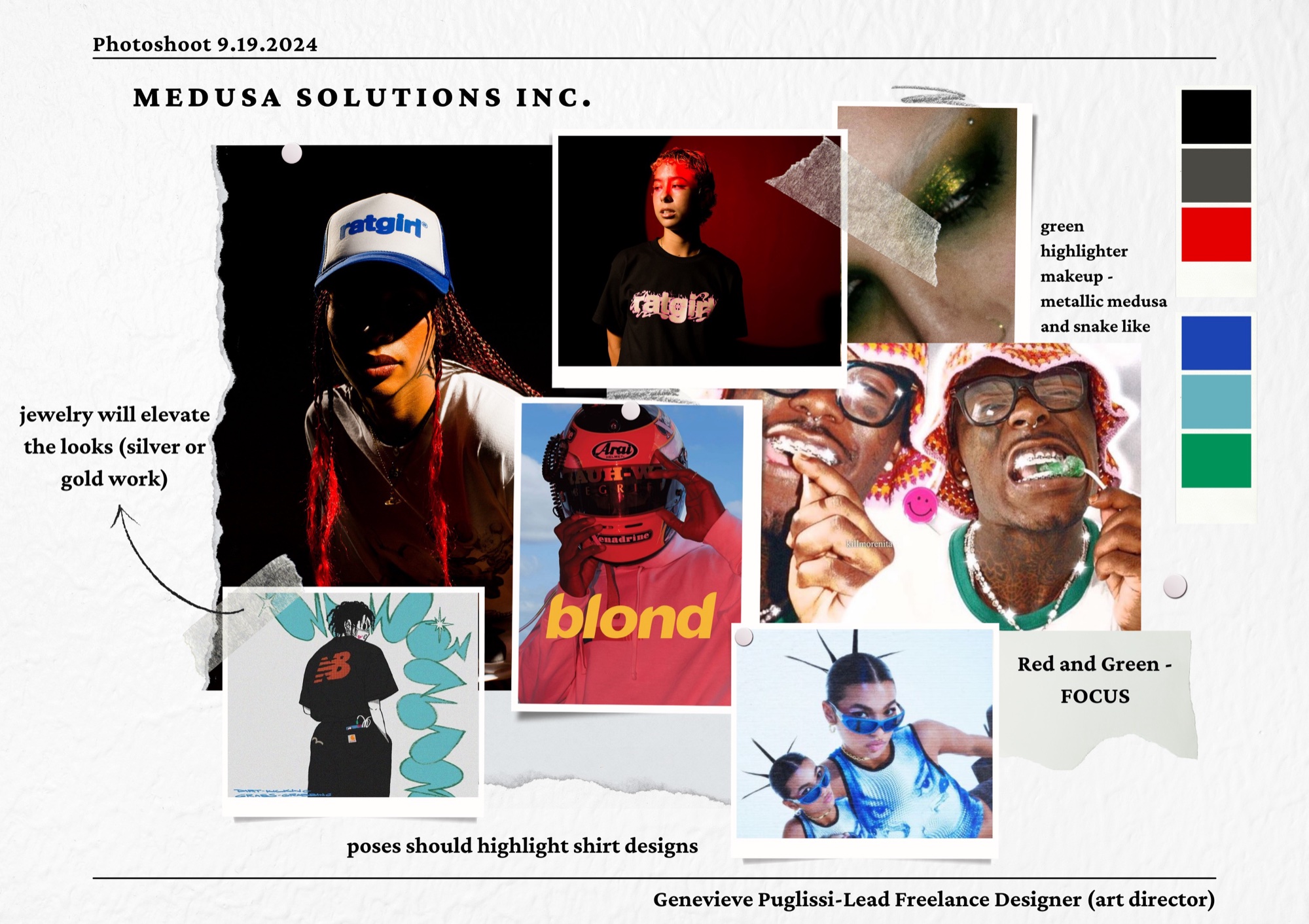
Art directed the first studio photoshoot as lead freelance designer
10.16.24
Wrote the project brief, channels, and deliverables for the launch
12.22.24
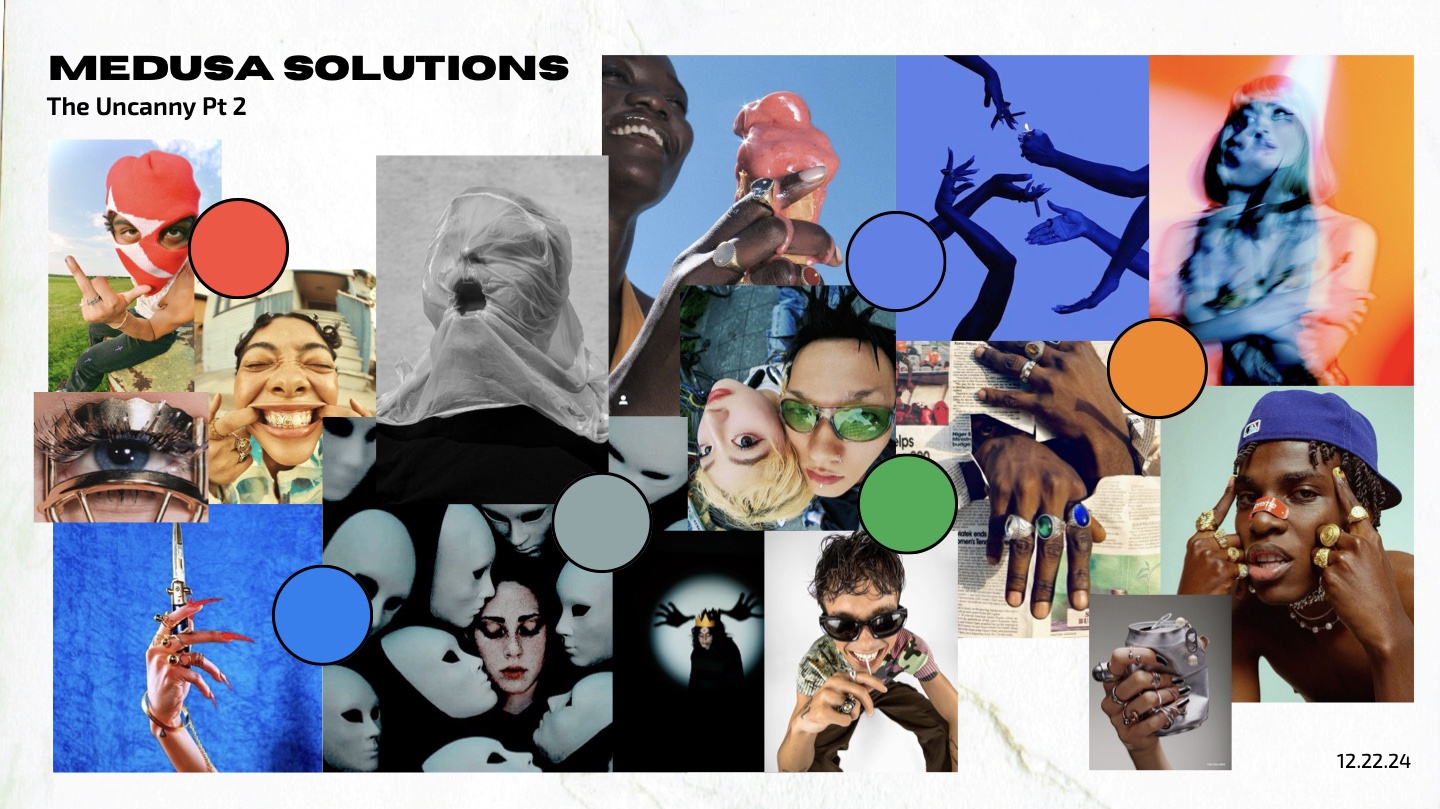
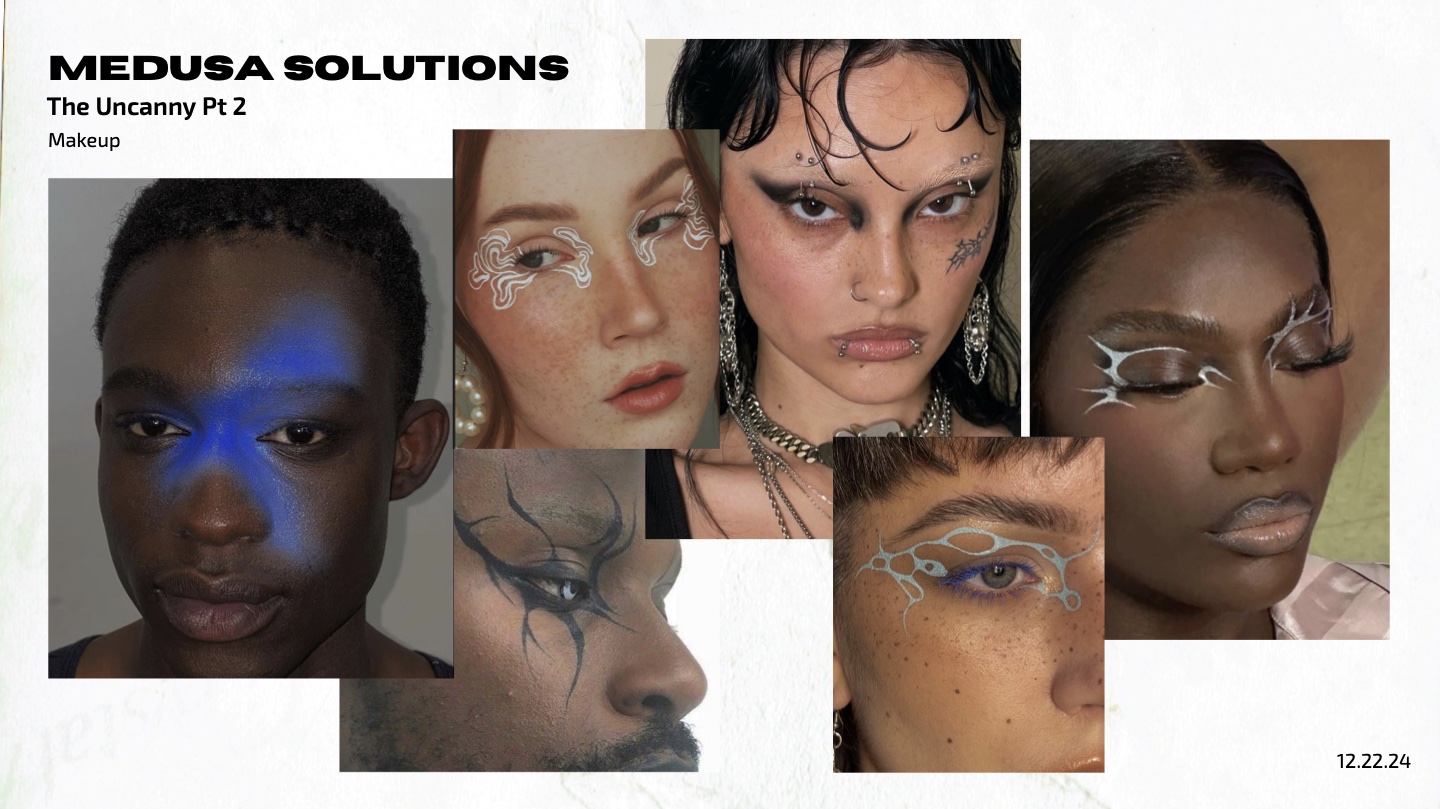
Moodboards for The Uncanny Pt 2 shoot, styling and makeup
03.12.25
Low-fidelity flows for the app and website
04.10.25
High-fidelity iOS screens and component library
2026
Launch — site live at medusa.so
05.17.25
Flew NYC → Miami to lead the Medusa apparel shoot
// PERSONAS
Who Medusa is for
Medusa's customers are adults 21 and up in Arizona and New York City. These proto-personas are composites built from that audience to guide design decisions. They're three different lives with one shared need: cannabis that fits around them, whether the barrier is mobility or a schedule that never lines up with store hours.
MC
Maya Castillo, 21
NURSING STUDENT · TEMPE, AZ
BUSY SCHEDULE · NO CAR
"Between clinicals and closing shifts, nothing's open when I'm free — and I don't have a car."
NEEDS
Pickup or delivery that fits around class and work
Student-budget deals and first-time discounts
Clear hours so she never makes a wasted trip
FRUSTRATIONS
The closest dispensary is two bus rides away
Deals and hours are scattered across different sites
HOW MEDUSA HELPS
Distance and price filters, first-time and daily-special deals, and open-now status on every store.
AW
Andre Whitaker, 35
SOUS CHEF · BROOKLYN, NY
LATE SHIFTS · NO TIME
"I'm on my feet for twelve hours and off at midnight. The last thing I want is a line."
NEEDS
Late hours or delivery after service
Fast reorders of what already works for him
Honest word on delivery speed before he commits
FRUSTRATIONS
Most stores close before his shift ends
Days off go to catching up, not errands
HOW MEDUSA HELPS
Hours on every listing, a delivery filter, "ordered on" history for reorders, and community posts about how fast stores deliver.
LO
Lorraine Okafor, 42
ARCHITECT · PHOENIX, AZ
MOBILITY · MEDICAL PATIENT
"On a bad back day, parking, walking the floor, and standing in line can take my whole afternoon."
NEEDS
Delivery or curbside pickup
Medical-friendly stores with clear potency and THC/CBD info
Reliable, repeatable orders she can plan around
FRUSTRATIONS
Driving isn't an option during flare-ups
Product listings are vague about effects and dosage
HOW MEDUSA HELPS
Curbside pickup and delivery filters, medical store type, and filters for THC/CBD percentage, potency, and effects.
// USER JOURNEY
Find a dispensary, join its community, post
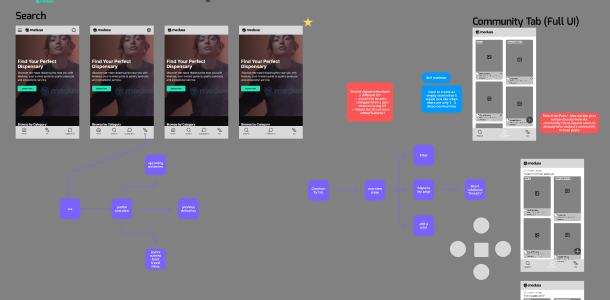
The core journey moves from discovery to belonging: search or browse the map, compare what's nearby, join a dispensary's community, and post to it. I mapped the flows between search, community, and posting before committing to screens.
Search and community flow mapping, low fidelity.
SITE MAP — WHERE EVERYTHING LIVES
Before any screen got drawn, the architecture had to answer one question: how does someone go from "I want something" to "it's on its way" without learning a new vocabulary? The web experience resolved into a persistent sidebar — every destination one tap deep, nothing buried.
MEDUSA
Home
Explore banner
Medusa Match
Nearby dispensaries
Category pills
Map
Distance radius
Open / closed
Deals & specials
Favorite a dispo
Match
Popular
Evening picks
New arrivals
Strains
Indica / Sativa
Hybrid / CBD
THC & CBD %
Effects & flavor
Community
Dispensary feeds
Make a post
Discussions
Account
Profile
Favorites
Orders
Learn & support
SIX DESTINATIONS · EVERY LEAF REACHABLE IN TWO TAPS FROM ANY SCREEN
iOS INTERACTION MODEL
The website is for deciding; the app is for belonging. Where the site optimizes for finding a store fast, the app assumes you already have one and turns it into a place you check in on. That split drove the interaction model:
01 — ORIENT
Set location
The app opens knowing where you are, so distance is context rather than a filter you apply.
MAP · SEARCH
02 — NARROW
Filter in plain language
"How far do you want your dispensary to be?" — filters phrased as questions, not form labels.
DISPO FILTERS
03 — COMMIT
Join the community
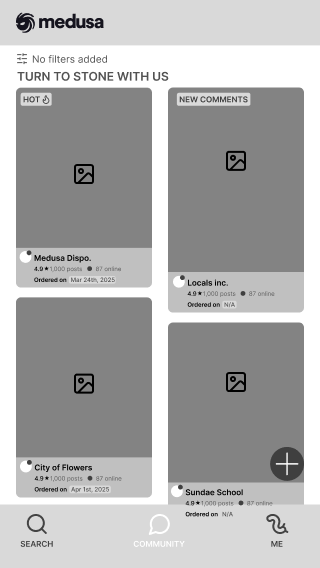
A store stops being a listing and becomes a feed with members, activity, and an order history.
COMMUNITY TAB
04 — CONTRIBUTE
Post from inside
Posting starts within a community, so the post already knows where it belongs — one less decision.
MAKE A POST
05 — RETURN
Reorder on memory
"Ordered on" pills and HOT / NEW badges make the second visit faster than the first.
COMMUNITY CARDS
THE SCREENS
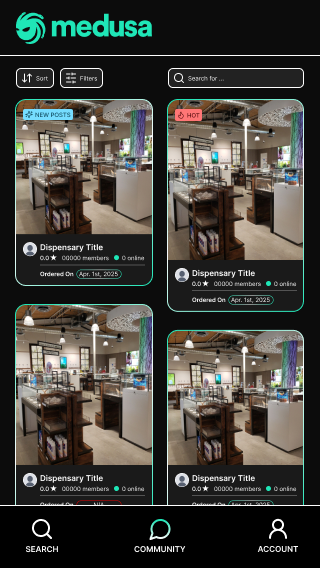
CommunityDispensary feeds with ratings, member and online counts, ordered-on history, and HOT / NEW badges.
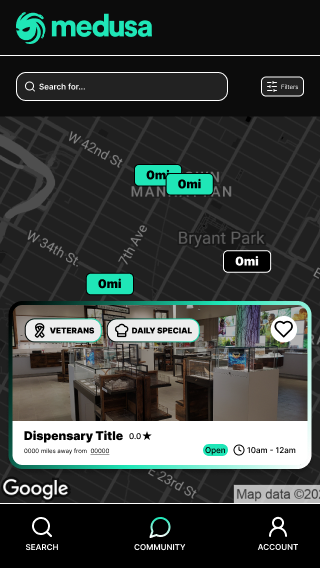
MapDistance, hours, open status, and deals — the decision layer before you commit to a store.
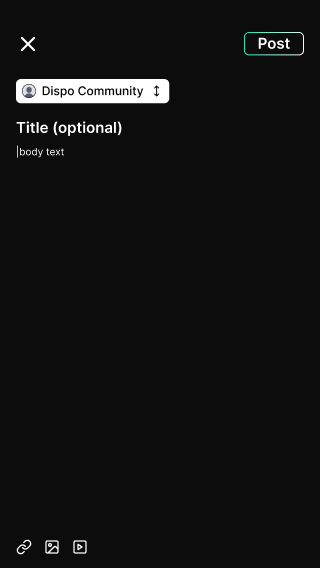
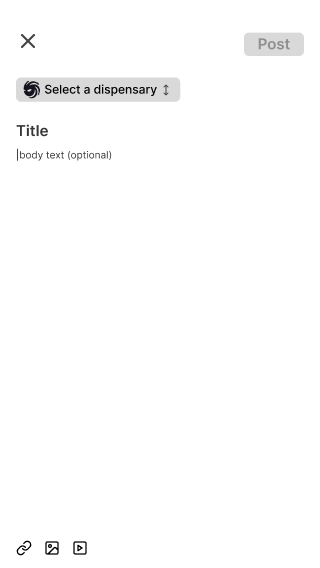
Make a postComposition starts inside a community, with the destination already resolved.
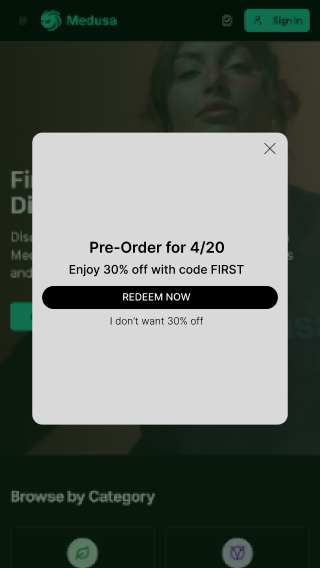
Pre-order momentLaunch promotion surfaced in-product — copy written to sound like a person, not a banner.
POSTING — TWO DIRECTIONS
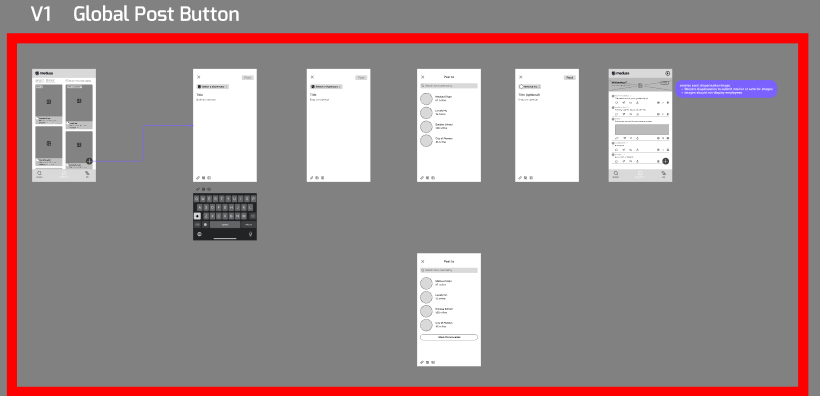
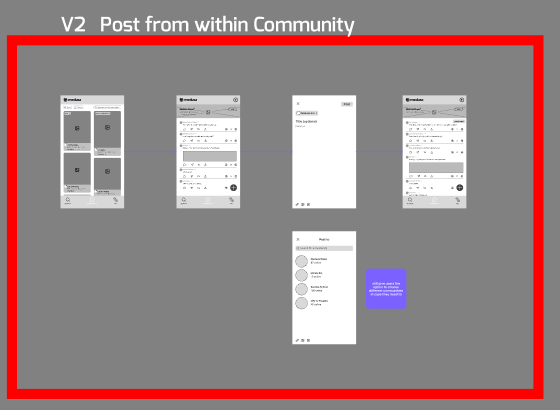
Posting went through two directions. V1 put a global post button in front of everything: write first, then choose a community. V2 starts inside a community, so the post already knows where it's going — one less decision for the user.
V1 — global post button.
V2 — post from within a community.
// iOS APP
Screens, low fidelity to high
Each dispensary gets its own feed with member and online counts, a record of when you last ordered, and badges for hot threads and new posts. The map surfaces distance, hours, open status, and deals like veterans' discounts and daily specials, backed by filters for delivery options, price, payment method, strain, potency, and effects.
COMMUNITY TAB
Low fidHigh fid
POSTING
Select a dispensary — low fidMake a post — high fid
MAP
Dispensary map — high fid
// WEBSITE REDESIGN
A web front door for the marketplace
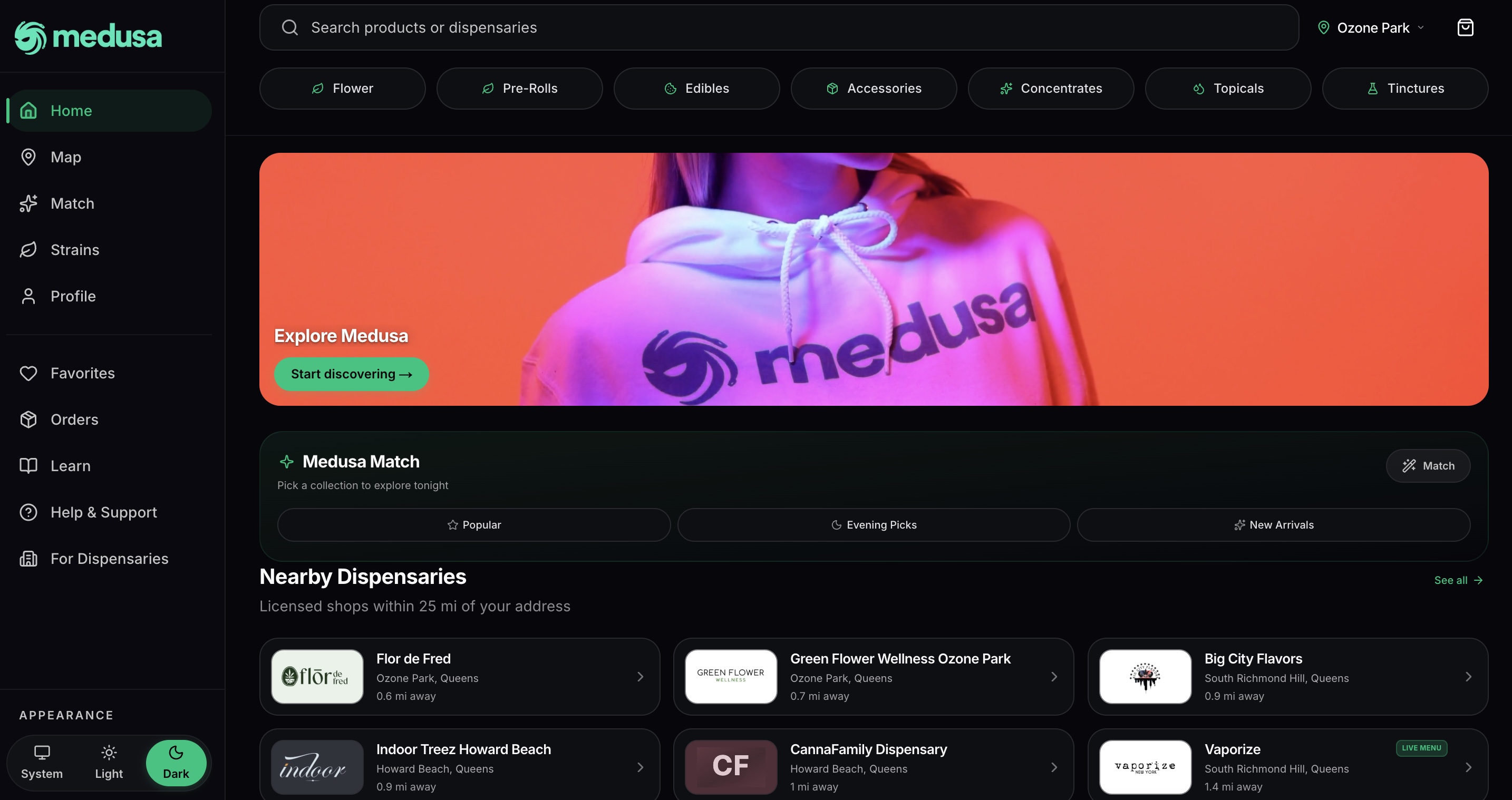
The redesigned desktop site puts discovery first. Search for products or dispensaries sits at the top next to your location. Category pills cover flower through tinctures. A persistent sidebar holds Home, Map, Match, Strains, Profile, Favorites, Orders, and Learn. The home page opens on the brand, then helps people decide: Medusa Match offers collections to explore tonight (Popular, Evening Picks, New Arrivals). Nearby Dispensaries lists licensed shops within 25 miles, with distance and live-menu badges. Visitors can switch between light and dark appearance.
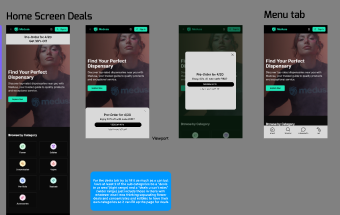
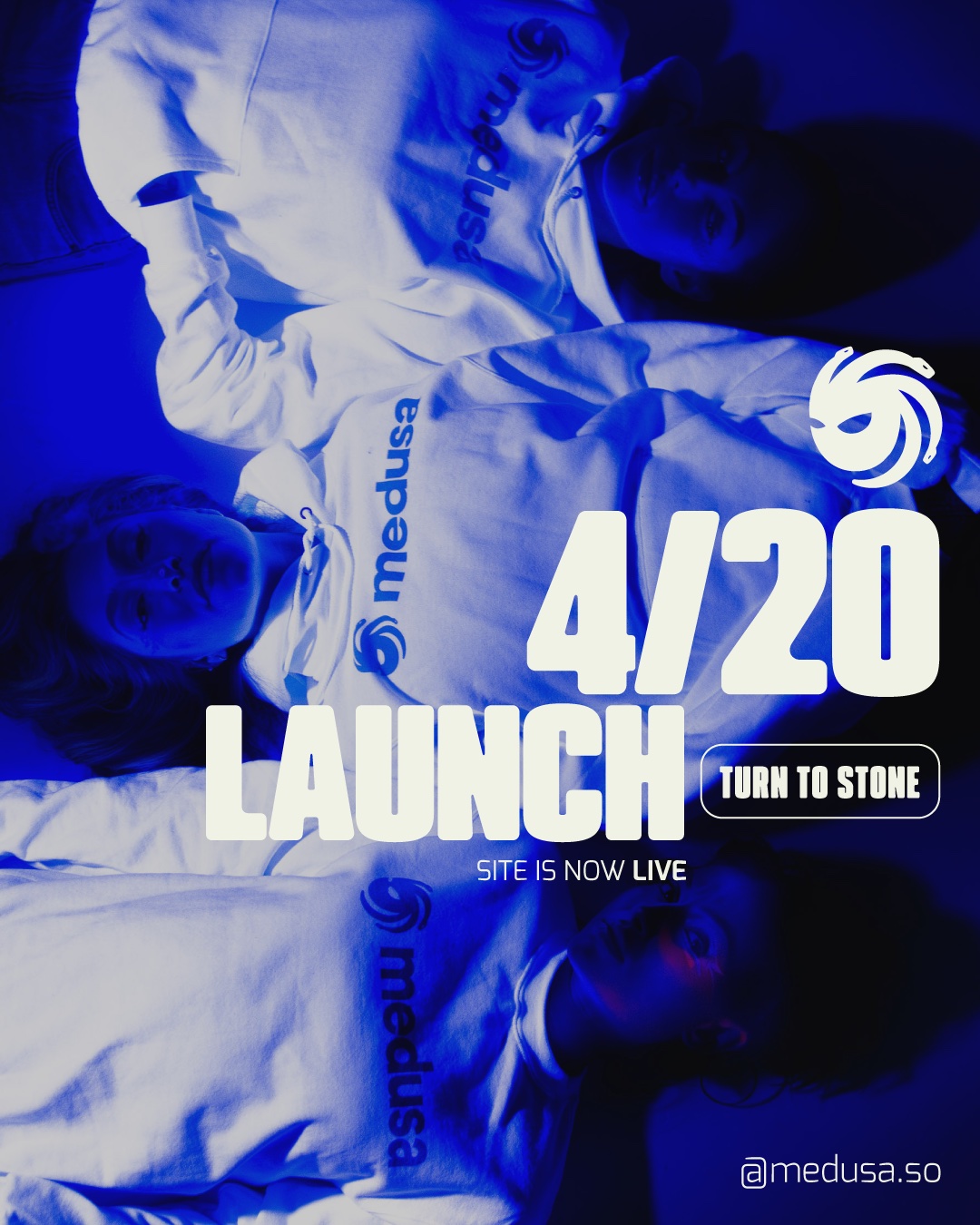
Before the redesign settled on a sidebar and Match, early web flows explored a deals-led home screen and launch promotions like the 4/20 pre-order offer. Today the site verifies each visitor's location and age before showing marketplace features where they're legally available.
Home screen deals — low fid.
4/20 pre-order pop-up
// OUTCOME
Launched in 2026
Medusa launched in 2026, with a pre-order campaign leading into it, and the platform is live today at medusa.so. [Placeholder — growth numbers you're comfortable sharing: sign-ups, first sales, community activity, or feedback from launch.]
// OTHER DELIVERABLES
Art Direction / Social Media / Copywriting
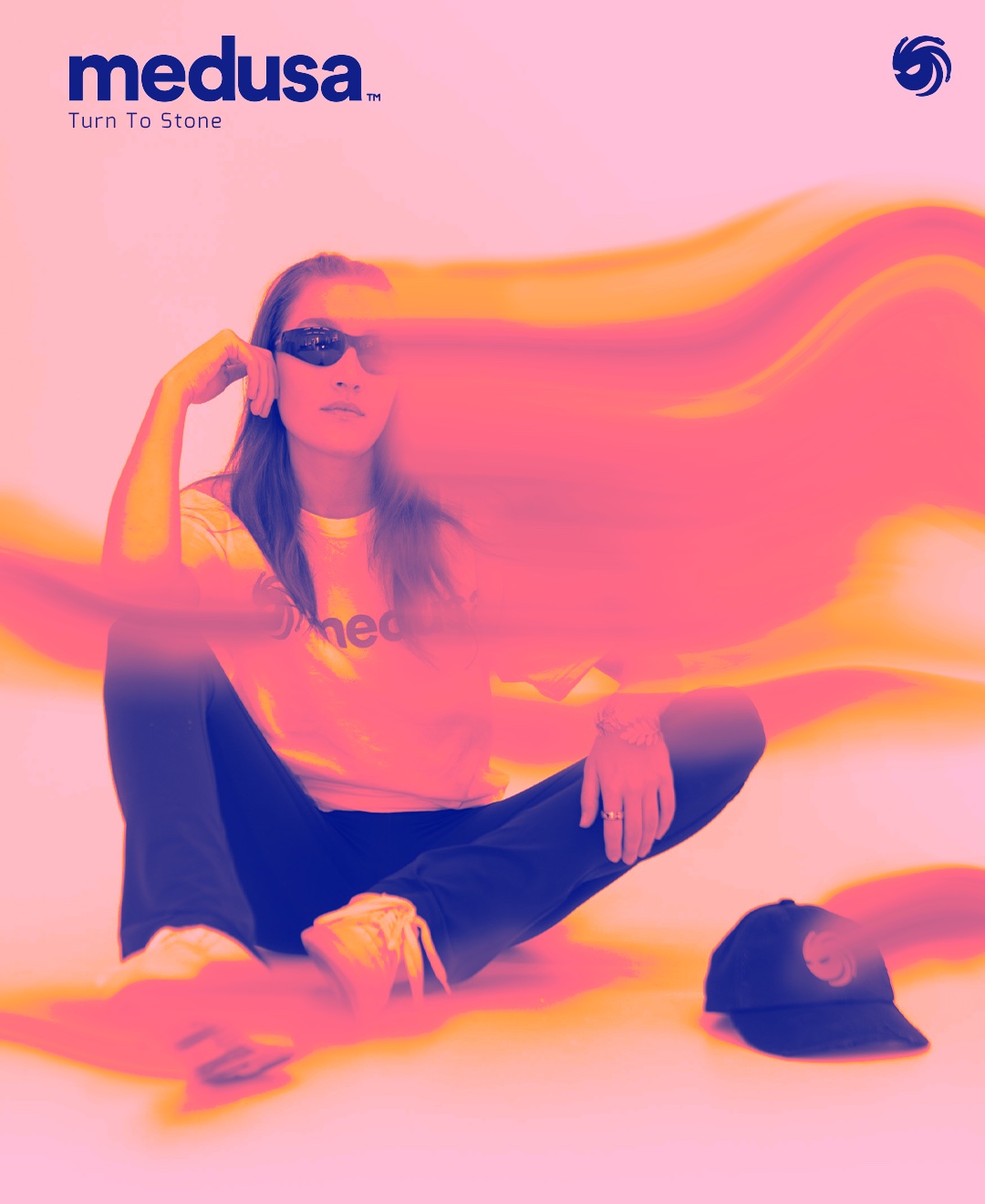
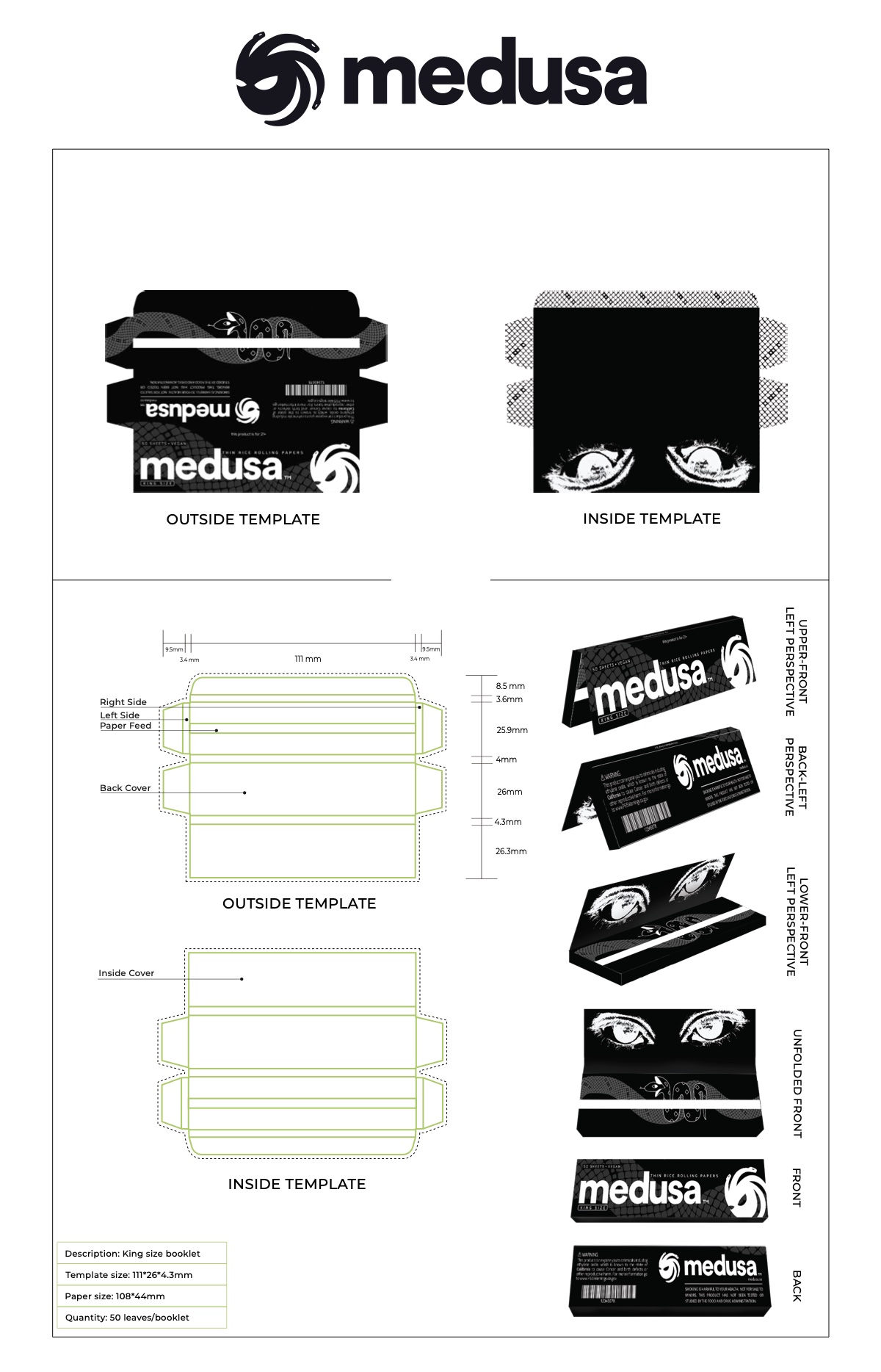
Before there was product to sell, the brand had to carry Medusa on its own. These pieces built awareness across apparel, shoots, social, and print.
ART DIRECTION
Photoshoot moodboard, 9.19.24 — red and green focus, jewelry, poses that highlight the shirts.
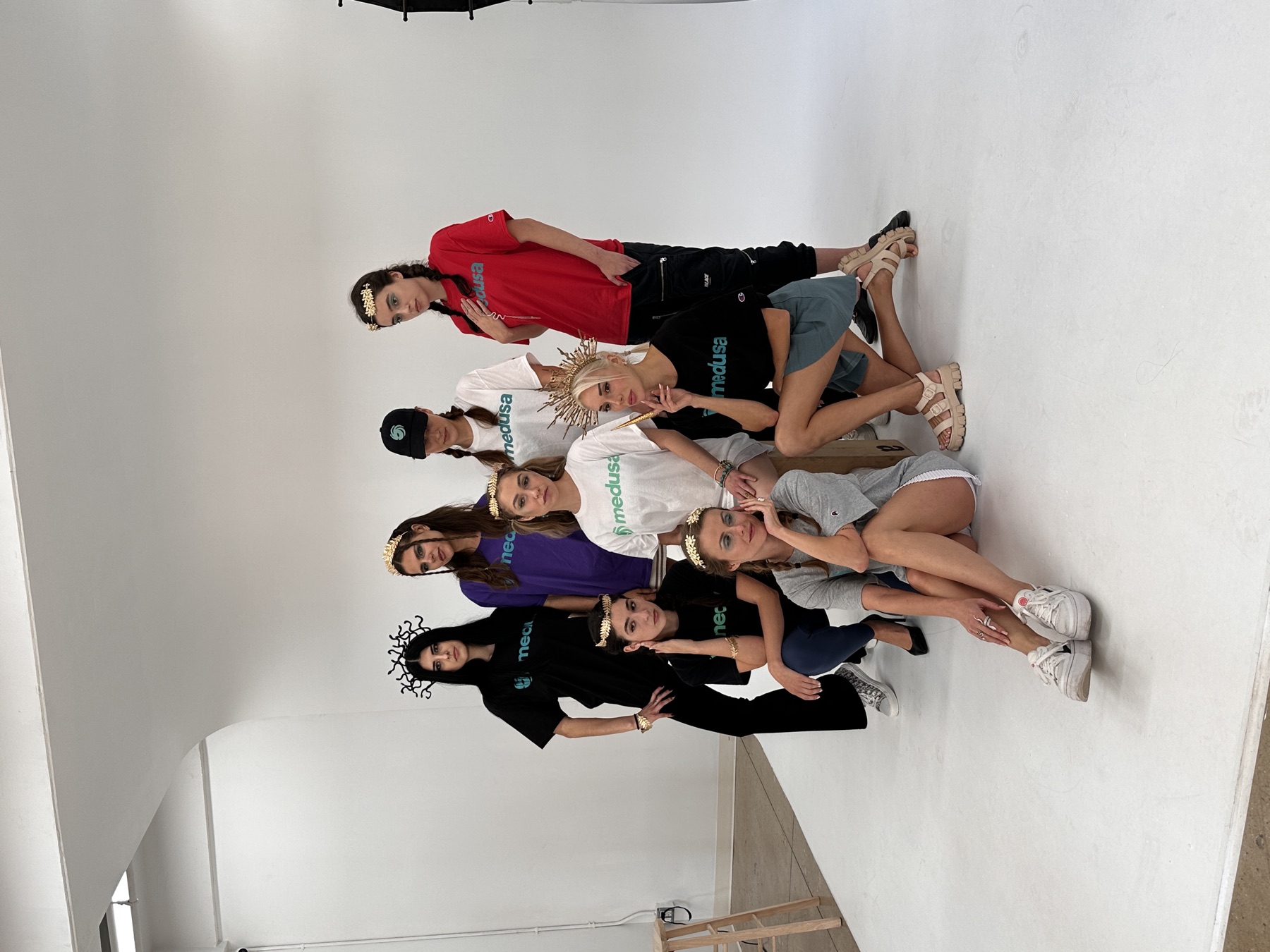
Studio shoot, 9.19.24.
The Uncanny Pt 2 — styling.
The Uncanny Pt 2 — makeup.
Miami shoot, 05.17.25 — flew in from NYC to lead it.
SOCIAL MEDIA
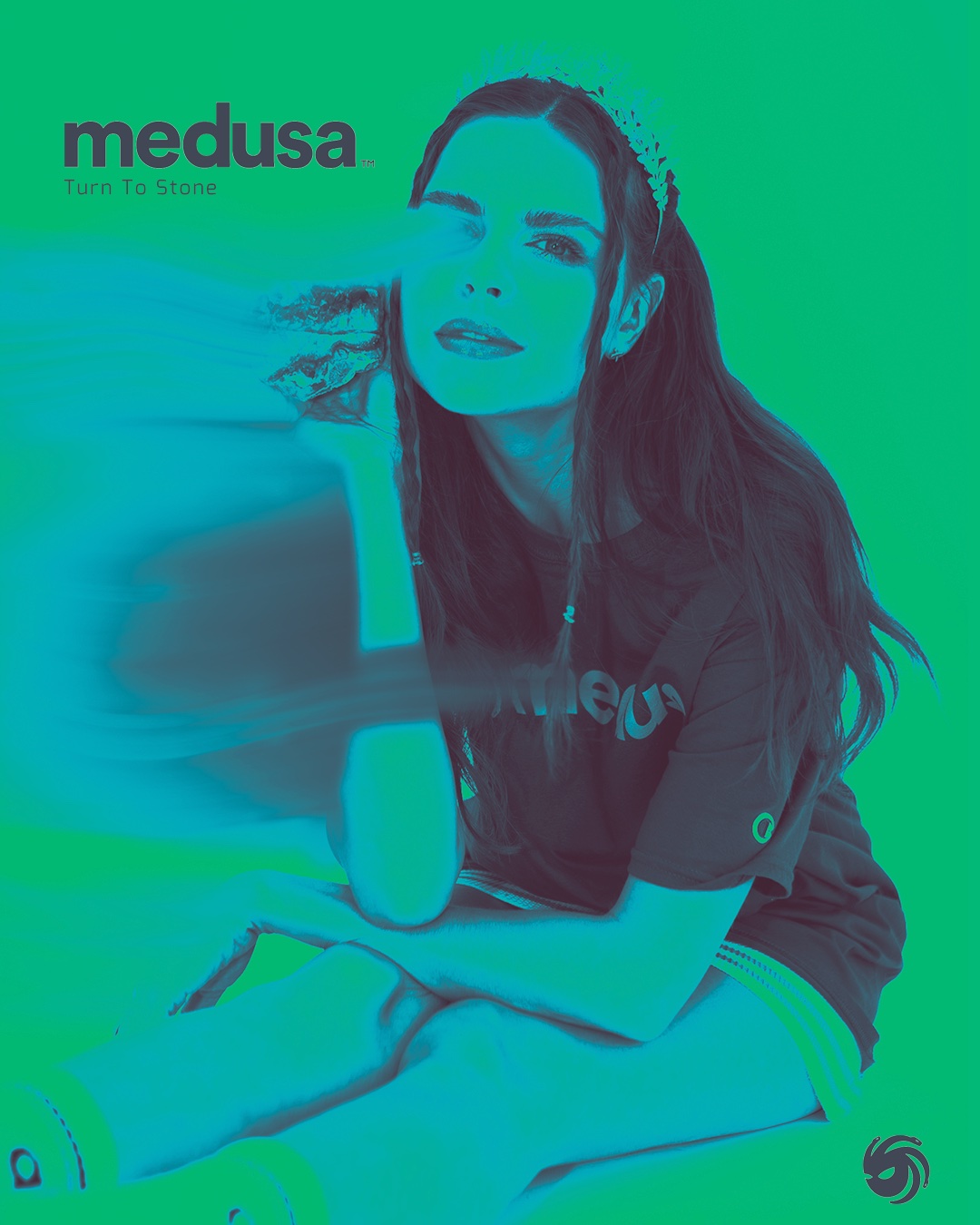
Turn To Stone campaign posters, including the 4/20 pre-order push.
COPYWRITING
Turn To StoneYou'll Get StonedTurn to stone with usHow much you got?They got what you need?I don't want 30% off